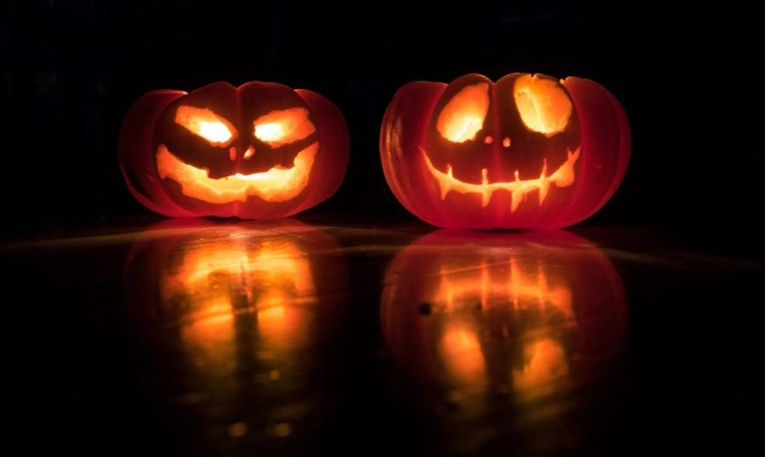
Why Halloween Is Unhealthy
Halloween deserves more scrutiny than we give it. A celebration that markets fear, turns mutilation into decoration, and encourages excess is hardly an obvious contribution to human well-being. You need not share my Christian faith to ask whether this is a healthy way to entertain ourselves, particularly our children. Critical thinking is available to everyone. It does not require a clerical collar, although occasionally it requires switching off the television.
Autumn itself is splendid. The leaves change colour, the air becomes crisp, and somebody decides the neighbourhood would look better with a dismembered corpse beside the begonias. We spend the rest of the year hoping our homes appear welcoming, and then devote October to making them resemble a crime scene. Apparently, nothing says hospitality quite like a skeleton on the porch.
Many families simply want their children to enjoy costumes, sweets, and time with neighbours. I understand that. Imagination is wonderful. A child pretending to be an astronaut need not submit a flight plan to NASA. But good intentions should begin the conversation rather than end it. What are we celebrating, what are we teaching, and why has increasingly gruesome imagery become an acceptable backdrop to childhood?
Imagine someone proposed a new annual family celebration featuring simulated murder, demonic characters, and frightened children, with a large bag of confectionery offered as compensation. We might ask a few questions before signing the permission slip. Familiarity has a remarkable ability to make questionable things appear perfectly sensible. Once something becomes a tradition, people sometimes treat thinking about it as a breach of etiquette.
The history deserves care. Halloween developed through a mixture of Celtic seasonal traditions associated with Samhain, Christian observances around All Hallows’ Eve, later folk customs, and modern commerce. The Library of Congress describes several competing explanations for trick-or-treating, including guising and souling. [1] Anyone presenting every modern custom as the direct continuation of a single ancient ritual is making the history tidier than the evidence permits. Critical thinking must examine alarming claims as carefully as reassuring ones.
Ancient accounts give us reason to examine the symbolism of burning human-shaped figures. Julius Caesar described enormous woven structures filled with living people and set ablaze as sacrificial offerings. According to his account, these were human beings trapped within a structure that became their place of death. They also sacrificed animals this way.
Today, in Black Rock, Nevada, there is the annual Burning Man eight-day celebration that also centers upon burning a human-shaped effigy, although its organisers do not conduct the human sacrifices Caesar described. There is clearly a resemblance from a proven historical connection. I believe the imagery deserves examination. Calling something an art installation does not relieve us of the responsibility to ask what it represents. Critical thinking should remain switched on, even when somebody has switched on the spectacular flames to light up a desert.
Burning Man has attracted some extraordinarily influential people, including Jeff Bezos, Mark Zuckerberg, Google founders Larry Page and Sergey Brin, Eric Schmidt, Sam Altman, Ray Dalio, and Elon Musk. Wealth and technical brilliance, however, do not settle questions of spiritual wisdom. A considerable bank balance is not a certificate of discernment.
Their attendance does not establish that they practise occult worship. But neither does celebrity participation place an event beyond examination. We should evaluate its actual practices and symbolism rather than borrowing our judgment from the guest list.
My late friend Doc Marquis helped sharpen my concern about the occult associations of Halloween. We both spoke at prophecy conferences together, and he shared his account of being raised within the Illuminati and practising witchcraft before becoming a Christian. Those were Doc’s testimony and experiences as he described them; I took his warnings seriously, and I also believe serious warnings deserve careful examination.
On one occasion, after hearing him expose what he described as dreadful evil, I asked how he was still alive exposing such deep-rooted evil. Doc replied, ‘They can’t touch me unless the Lord our God allows it.’ That answer expressed the confidence of his faith. What I remember is a man whose story centred on leaving darkness behind. His experience gave me reason to listen; it did not oblige every listener to abandon questions. Indeed, asking questions is precisely what I am encouraging here.
Even if you reject the spiritual dimension entirely, the present-day imagery remains worth discussing. There is a difference between remembering people who have died and using mutilated bodies as entertainment. A culture can honour the dead with dignity. It can also sell artificial blood by the bottle and call the result family fun. We are entitled to wonder why the second option receives such enthusiastic promotion.
Children differ in what they can tolerate. The American Academy of Pediatrics notes that gentle spooky stories can allow children to explore fear safely, while violent or adult horror content can harm young viewers and leave some distressed or experiencing nightmares. [2] That distinction matters. A smiling pumpkin is not the same experience as a realistic murder scene. A frightened child does not become less frightened because an adult announces that it is all pretend.
If a child is uncomfortable, listen. There is no prize for enduring something upsetting, and no sensible reason to shame a child for declining it. Parents should be free to say that some entertainment is unsuitable. Saying no to a horror attraction is hardly depriving a child of an education. There are quite enough opportunities for disappointment later, beginning with assembling flat-pack furniture.
The practical hazards deserve attention too. Traffic authorities warn about children appearing in unexpected places, poor visibility wearing their masks, and impaired drivers around Halloween. [3] Pediatric guidance also addresses disrupted routines, excessive added sugar, and choking hazards for very young children. [4] One evening of sweets does not automatically cause diabetes, and children saying ‘trick or treat’ are usually following a playful custom rather than committing extortion. We can make a strong case for healthier choices without exaggerating it. Saying ‘trick or treat’ originally meant sacrificing a servant or family member in ancient times.
Then there is the pressure to buy. A season devoted to frightening us somehow manages to be reassuringly profitable. Before purchasing a giant skeleton, we might ask who benefits from persuading us that an ordinary garden is inadequate without a towering imitation corpse. The neighbours may survive the disappointment of seeing an actual shrub.
As a Christian, I also object to treating witchcraft, demons, and attempts to contact the dead as amusing playthings. You may disagree with my understanding of spiritual reality. We can still have an honest conversation about meaning, well-being, and the values we pass on. I am not claiming that every child in a costume intends to worship anything, nor am I interested in condemning families. My concern is with what we choose to celebrate and how readily we allow entertainment to escape examination.
Ask what an activity does for your child. Does it encourage creativity and kindness? Does it leave them frightened or pressured? Is the enjoyment really dependent upon cruelty, grotesque imagery, or occult fascination? Could the best parts of the evening be enjoyed another way? These questions are more useful than either ‘Everybody does it’ or ‘Everything about it is evil.’ Neither slogan does our thinking for us.
We can enjoy autumn with music, a shared meal, and generosity towards our neighbours. A harvest gathering or an evening of games needs no simulated execution to make it memorable. October 31st is a date on the calendar; it is a day the Lord has made, and we remain free to decide what to do with it. For my part, I would rather offer children something that celebrates life and leaves them feeling safe.
My conclusion is that Halloween’s fascination with terror and death, together with its invitation to excess, makes much of the celebration unhealthy and worth refusing. You can disagree with me and still examine it honestly. Keep the kindness, question the spectacle, and make your choices deliberately. We have enough real darkness to contend with without buying more of it for the front lawn. Put the kettle on. Enjoy a nice cup of tea. The skeleton can fend for himself.
Sources
1. Library of Congress The Origins of Halloween Traditions
2. American Academy of Pediatrics Should I let my child watch scary movies?
3. National Highway Traffic Safety Administration Halloween Safety Tips
4. American Academy of Pediatrics Easing Babies and Toddlers into Halloween Fun
Published with permission of libertysentinel.org