Reviewing HB 517
By Karen Schumacher
HB 517 was introduced to the legislature by Rep. Scott on January 22, 2026. The purpose of this legislation is to remove Idaho from the Pacific Northwest Economic Region (PNWER).
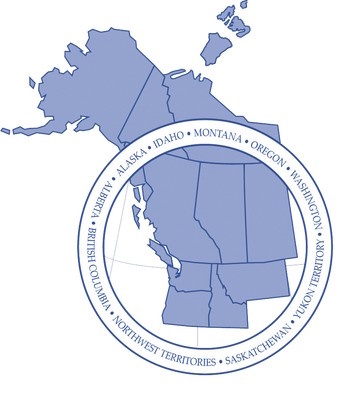
PNWER, “a nonpartisan public-private partnership” and non-profit organization, was established by IC Title 67 Chapter 78 in 1991, based on the idea that there was an emerging “global economy” where specific areas were engaging in cooperative arrangements. One such area was the Pacific Northwest that included Idaho, Washington, Alaska, Montana, Oregon, and foreign country provinces of Alberta and British Columbia in Canada. The Canadian Yukon Territory, Saskatchewan, and Northwest Territories were added later. State legislators were assigned to work cooperatively with this entity.
Briefly, its goals (pg 1) include coordinating provincial and state policies throughout the region, exchanging information and enhancing regional competitiveness, achieving economic growth, and “leverage regional influence in Ottawa and Washington D.C.” among other activities.
“All” legislators from both countries, along with state governors and premiers, are added to the PNWER governance structure. Also included are private sector and non-governmental organizations (NGO). One third of funding is provided from state and province dues, one third from private sector sponsorship and dues, and one third from private and public grants. In Washington, the PNWER-Net working subgroup is allowed to accept gifts, grants, and donations from the private sector. Whether this translates over to Idaho representatives is questionable.
Each participating entity signs a PNWER Agreement that includes Interlibrary sharing, and IC 67-7802, Article III, outlines the organizational structure. In Idaho, Rep. Britt Raybould is the PNWER State Lead and Vice President whose duties (pg 5-6) include attendance to the summit and executive committee meetings, holding delegate meetings, assisting with capital visits, ensuring that dues are paid, developing an annual budget and action plan, serving as a liaison to the public and private sector to seek their involvement, engaging local media on initiatives and events, and remaining non-partisan.
The Delegate Council includes Gov. Little, Rep. Raybould, Sen. Taylor, Rep. Shepherd, Sen. Burtenshaw, and Rep. Green, with Sen. Lent, Rep. Wisniewski, and Sen. Semmelroth serving as alternates. Delegate duties (pg 3) include attendance to the summit, promoting participation, holding meetings, assisting in coordination of PNWER meetings in Boise, and ensuring dues are paid on time.
Some private sector ‘representatives” include Regence Blue Shield, J.R. Simplot, Hecla Mining, ExxonMobil, Amazon, Microsoft, and the Idaho Water Users Association.
These meetings are intended to share PNWER policies, information, and action items.
PNWER has working groups for multiple issues (pg 9-10) on which legislators sit with private sector individuals. Rep. Gestrin, Sen. Stennett, and Sen. Winder were listed on working groups in 20-21 but are no longer in office. Regardless, the action items these groups were working on can be seen up to 2023. Current working group Co-Chairs on page 05 include Rep. Raybould on Water Policy and Sen. Burtenshaw on Invasive Species. Sen. Cook is on the Regional Tourism Council.
Annual Summits have been held for years across the region where all participants gather to discuss solutions and policy, identify ways to get more money, and create more reasons to grow themselves.
The 2023 Summit was held in Boise and included policy tours, action items, and benefits for sponsors. Who pays for the government travel and lodging isn’t clear.
British Columbia was the site for the 2024 Summit, again with pricey travel and lodging costs, tours for both business and pleasure, ways to share their involvement with the media, and a three day agenda. Topics on July 22 included shared values and goals with Canada, energy, invasive aquatic species at which Rep. Raybould spoke, and zero emissions, among others. July 23 started with awards to themselves for their great work, then topics on regional innovators changing the world, global markets, transitioning to a digital border, AI and Digital ID, and regional tourism with Elaine Clegg participating. A link to watch each session is provided so Idahoans can be informed of their future as determined by unelected individuals from foreign countries and other states. For those with more curiosity, previous webinars can be found here.
PNWER was proud to boast about Idaho achievements in 2024 including: building partnerships; securing funding for PWNER’s LEHI program and transportation projects in which Valley Regional Transit is a beneficiary; making recommendations to seek funding for a tabletop exercise on foreign animal disease outbreaks; supporting trade with Canada; establishing a regional tourism council; and partnering to plan a cybersecurity workshop. Americans and legislators were far outnumbered at this Summit.
At the annual 2025 Summit held in Washington, the video states PNWER comes together to find solutions to regional challenges, creating lasting connections between business and government leaders, along with travel and lodging discounts. The corporate sponsorships and “partnerships” are stunning with Amazon and Microsoft at the top of the list. Videos on the sessions and what was discussed can be found here and here. Again, included in this Summit were “policy” tours and pleasure activities, with a reminder on how to behave. The 2026 Summit will be held in Edmonton, AB (pg 27).
PNWER 2025 notes on page 3 indicate that 62.5% of attendees are from the private sector and NGOs, while 47.5% are from the government. This number is skewed a little bit by combining the government with NGOs and academia on page 07 in its Annual report. Regardless, it is clear this whole outfit is dominated by corporations and others who are not elected representatives.
Found in the 2025 Annual Report (pg 12), Lt. Governor Bedke co-chaired the Idaho State Council, another public-private partnership, and in which former Sen. Winder made an appearance. From that page on, details are given on PNWER’s work in federal engagement, trade & energy, tariffs, tourism, transportation, aquatic invasive species, critical minerals, AI, disasters, and livestock health. A financial report can be found on page 28, and in typical government fashion, the spending outpaced the revenue. All Annual Reports can be found here.
In America’s form of government as a Republic, connections with the government were intended to be with citizens, not other states, foreign countries, or corporations. It could be asked, of what benefit did Idahoans receive from these sessions between corporations and government? Is the trajectory towards Digital ID, sustainability, and AI what Idahoans want?
So, Idaho legislators are gallivanting about in other states and foreign countries, attending meetings with individuals who have contrasting ideologies from Idahoans, and subjected to corporate influence, all for the cause of being neighborly and making the lives of Idahoans better. Very concerning is the PNWER bias towards activities which Idahoans may not want and in which legislators are having to address to either control or stop those activities, such as the PNWER push for vaccines in 2021. One has to ask themselves if there has actually been any positive impact on their lives as a result of these gatherings.
PNWER is a regional group. The World Economic Forum loves regionalism, regional governance, and regional integration. Regionalism breaks down America’s system of governance. Further dangers of regionalism is explained by Alex Newman. Of greater danger is Klaus Schwab suggesting regionalism as an interim to globalism in his Great Reset book.
The very idea that PNWER has the authority to create an alliance or trade between states and foreign governments is a questionable violation of Article I, Section 10, Clause 1 in the U.S. Constitution. Idaho representatives should know better. Why are legislators “collaborating” with Oregon and Washington, two states where citizens are so miserable they are moving to Idaho, and even want to become a part of Idaho? Both states are, in general, so off base from what most Idahoans think that it is puzzling how any “solution” could be attained on any issue that would benefit Idaho.
HB 517 is an opportunity to end Idaho’s involvement with PNWER and its involvement with corporatism. The $60,000, and whatever else is spent that would be saved, could be used towards legislators meeting with Idahoans on the very same issues and coming up with solutions that would benefit Idahoans. If Idahoans have concerns about an issue, it is their elected representatives that are responsible for addressing those concerns, not with other states and foreign countries.
HB 517 was referred to House State Affairs on January 23. The Committee can be contacted at hstaf@house.idaho.gov and your legislator can be contacted here. Let both the Committee and your legislator know what you think about HB 517.