I’ve Always Questioned Polls: Vindicated!
By Rich Loudenback
Political polls are always very politically biased in my opinion, regardless of what they claim. It seems most of them are generated by large and small media outlets, and even those claiming to be unbiased somehow always produce findings that seem skewed left.
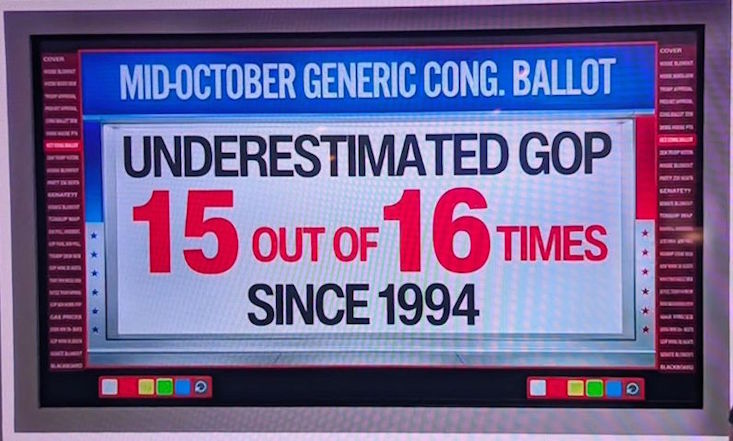
Just last night on the Jesse Waters Show on Fox Network they produced a screen showing that Since 1994 the Mid-October Generic Congressional Ballot UNDERESTIMATED GOP counts 15 out of 16 times.
The main reason I don’t believe political polls is that I don’t believe these pollsters blindly send out requests for opinions to unknown areas. They are running a business, and like any other, they must keep records they learn from, and subsequently, get to know the politics of an area or the individuals in an area whom they’re contacting. I’m sorry, but I just can’t believe they are always blindly contacting unknowns in unknown areas.
When they want more results for a given candidate or issue, they already know where to make those supportive contacts. Of course, they would have us believe all their efforts are blindly done without any knowledge of the politics of given areas or specific contacts.
Pollsters are businesses and as such their primary purpose in being is to make a profit and there’s lots of political money being spent for garnering influence, need I say more. Of course, this is just my opinion!
MY VINDICATION:
- An alleged national pollster says it faked its data as a ‘social experiment.’ Here’s what to know
- Polling Company Collapses After Giving Francesca Hong a 23-Point Lead in a Race She Lost, Admits to ‘Bogus’ Data on LA Mayor Karen Bass
- What to know about the fake election poll numbers shared and retracted by a mysterious company
- The Independent: Second polling firm admits to fabricating data
- Also, ChatGPT reports that Research 2000 — accused of fabrication in 2010. The political website Daily Kos accused its polling contractor, Research 2000, of supplying fabricated or manipulated survey data after statisticians found unusual patterns. Daily Kos sued the firm.